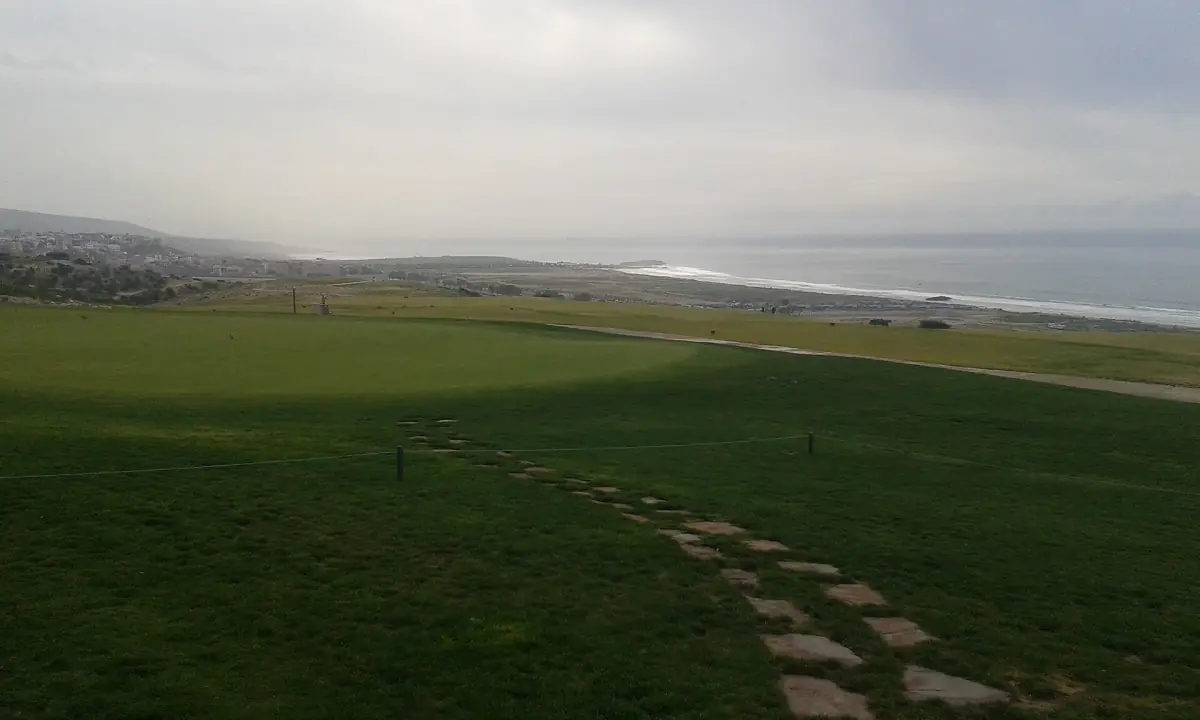
Taghazout weather at a glance
The coast has a mild climate. Daily highs stay between about 21 °C in January and 27 °C in August, and nights fall to about 8 °C in January. Rain is mostly a winter matter: November and December are the wettest months, and June and July are almost dry.
The figures below are monthly averages for 1991–2020 from the weather station at Agadir Inezgane, run by the national weather service. It is a regional reference, not a station on the beach in Taghazout. The numbers are averages and not a forecast, and they are not the measured values of 2026. Monthly sea temperature figures are not given on this page, because wetsuit advice is a more useful guide to how cold the water feels.
Month by month
Averages for 1991–2020, with wetsuit advice from one surf school.
| Month | High °C | Low °C | Rain mm | Wetsuit (one school) |
|---|---|---|---|---|
| January | 21.1 | 8.4 | 31.6 | 3/2 mm full suit |
| February | 22.0 | 10.2 | 28.6 | 3/2 mm full suit |
| March | 23.4 | 12.3 | 31.3 | 3/2 mm or 2/2 mm short sleeves |
| April | 23.2 | 14.1 | 13.8 | 3/2 mm or 2/2 mm short sleeves |
| May | 24.2 | 15.9 | 5.4 | Shorty or shorts |
| June | 25.6 | 18.1 | 0.8 | Shorty or shorts |
| July | 26.7 | 19.2 | 0.2 | Shorty or shorts |
| August | 27.0 | 19.5 | 3.1 | Shorty or shorts |
| September | 26.1 | 18.6 | 3.7 | Shorty or shorts |
| October | 26.1 | 16.7 | 21.2 | Shorty or shorts |
| November | 24.1 | 12.9 | 42.3 | 3/2 mm full suit |
| December | 22.1 | 10.1 | 47.4 | 3/2 mm full suit |
Another school, The Pearl, recommends a 3/2 mm suit in autumn and a 4/3 mm suit in winter. The two schools disagree about winter, so if you feel the cold, take the thicker suit. Wetsuit advice is a school's recommendation, not a standard, and it does not guarantee that you stay warm.
Tours and lessons around Taghazout
Surf lessons, coast trips and day tours near Taghazout, with live prices and availability.
Best time to visit by purpose
The answer depends on what you want to do.
Surfing on the point breaks
One school describes the winter surf season as October to March, when the point breaks work. In the warm half of the year it describes smaller to medium swells. That is a provider description, not a forecast for a given day. Anchor Point and Killer Point are for experienced surfers whatever the month. See the surf guide.
Beginners and lessons
There is no single best month for beginners. Sandy beaches such as Devil's Rock are used for lessons, and a school will tell you what the swell allows on your day. Book a week and be flexible about the day.
Surf camps compared →Warm days and the beach
June to September has highs of 25.6 to 27.0 °C and almost no rain. Evenings stay mild, with lows of 18 to 19.5 °C in July and August. Check the water and the flags on the day.
Walking and quieter days
March to May has highs of 23 to 24 °C and falling rain: 31.3 mm in March, 13.8 mm in April and 5.4 mm in May. Rain in November and December is more frequent, with 42.3 and 47.4 mm.
Safety and weather warnings
Natural hazards are part of travel in Morocco.
Heavy rain and flooding
The German Federal Foreign Office lists seasonal flooding in Morocco. Follow local warnings and instructions from the authorities in the wet months.
Earthquakes
The same advice lists a risk of earthquakes in the country. Know the exits of your building and follow instructions if something happens.
Swell and currents
Strong swell brings currents at some spots, for example at Panoramas. A weather average says nothing about the swell on your day, so ask a school or a local surfer before you paddle out.
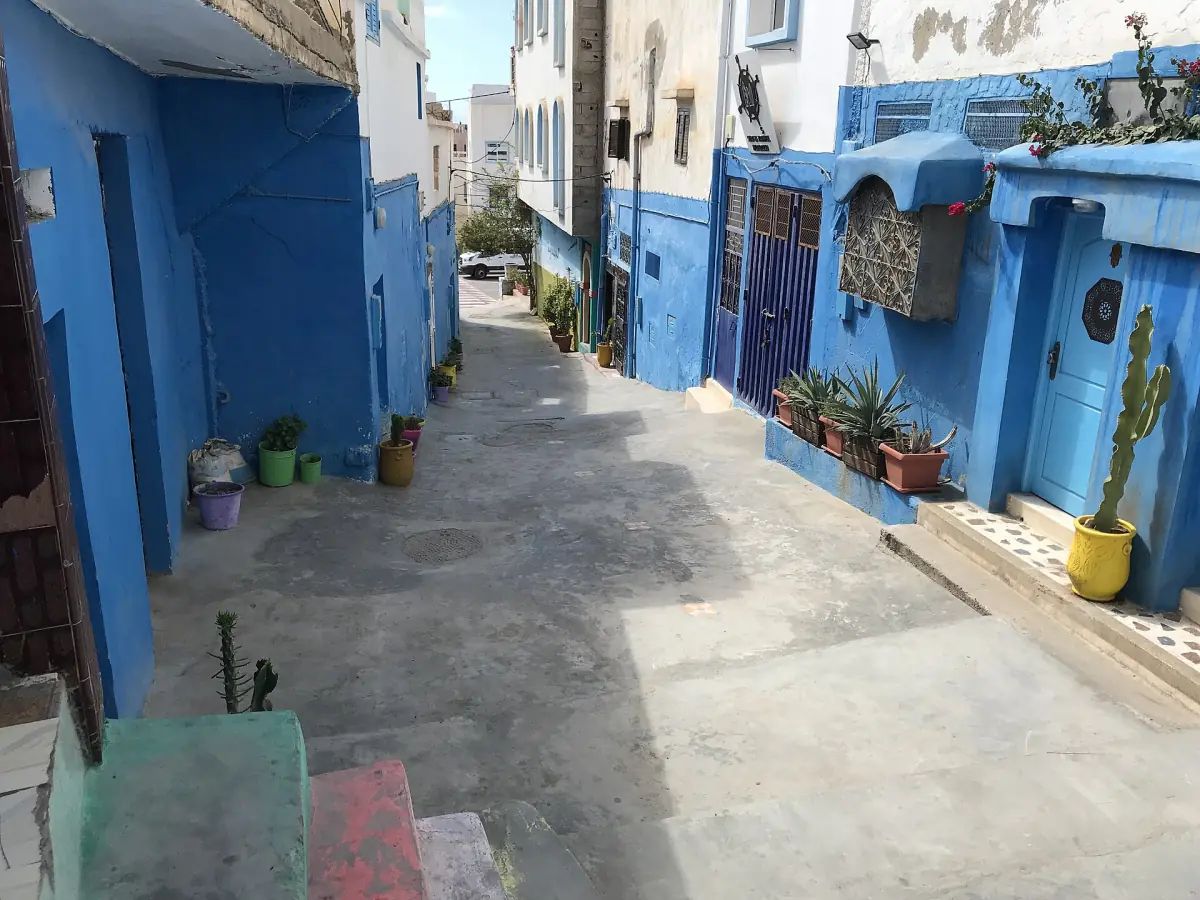
Things to do in Taghazout
Twelve experiences for any weather.
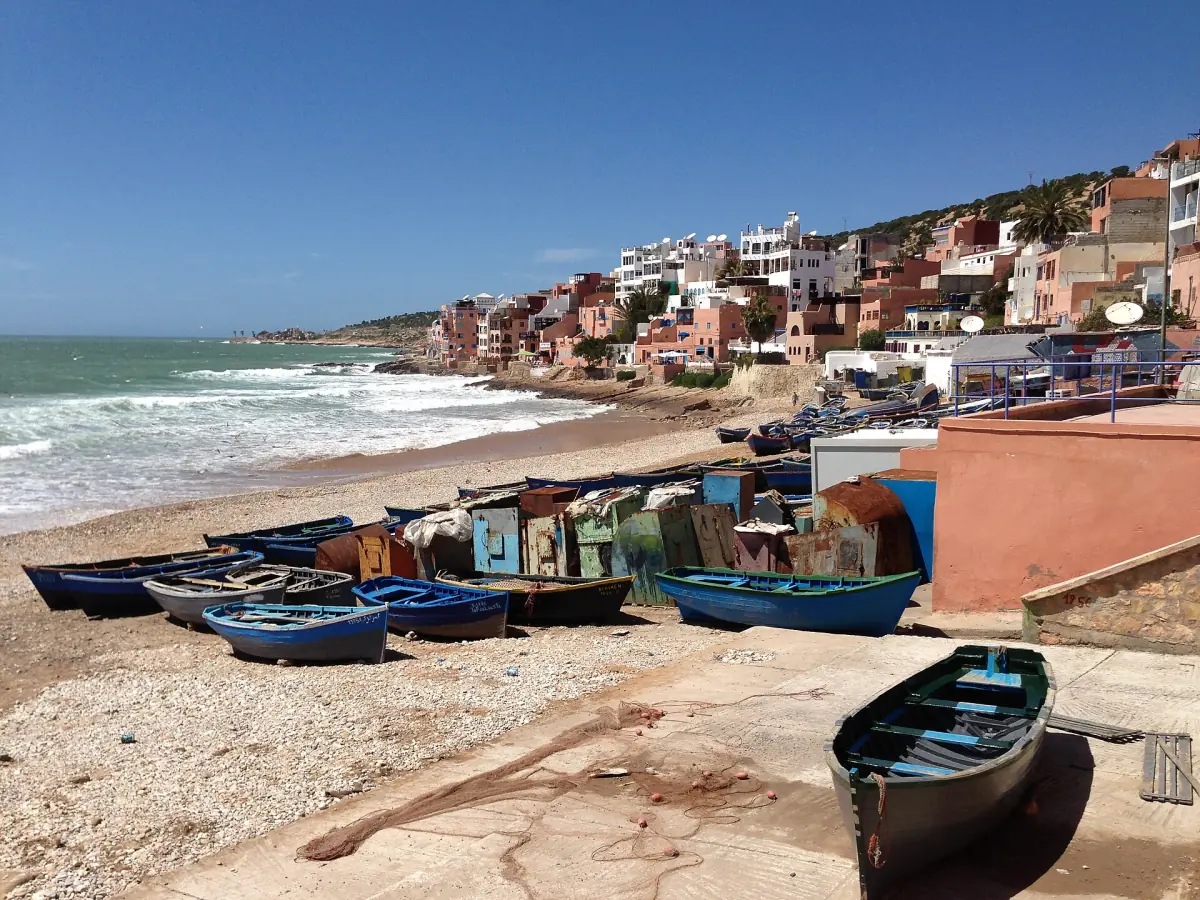
Getting there
From Agadir airport to Taghazout.
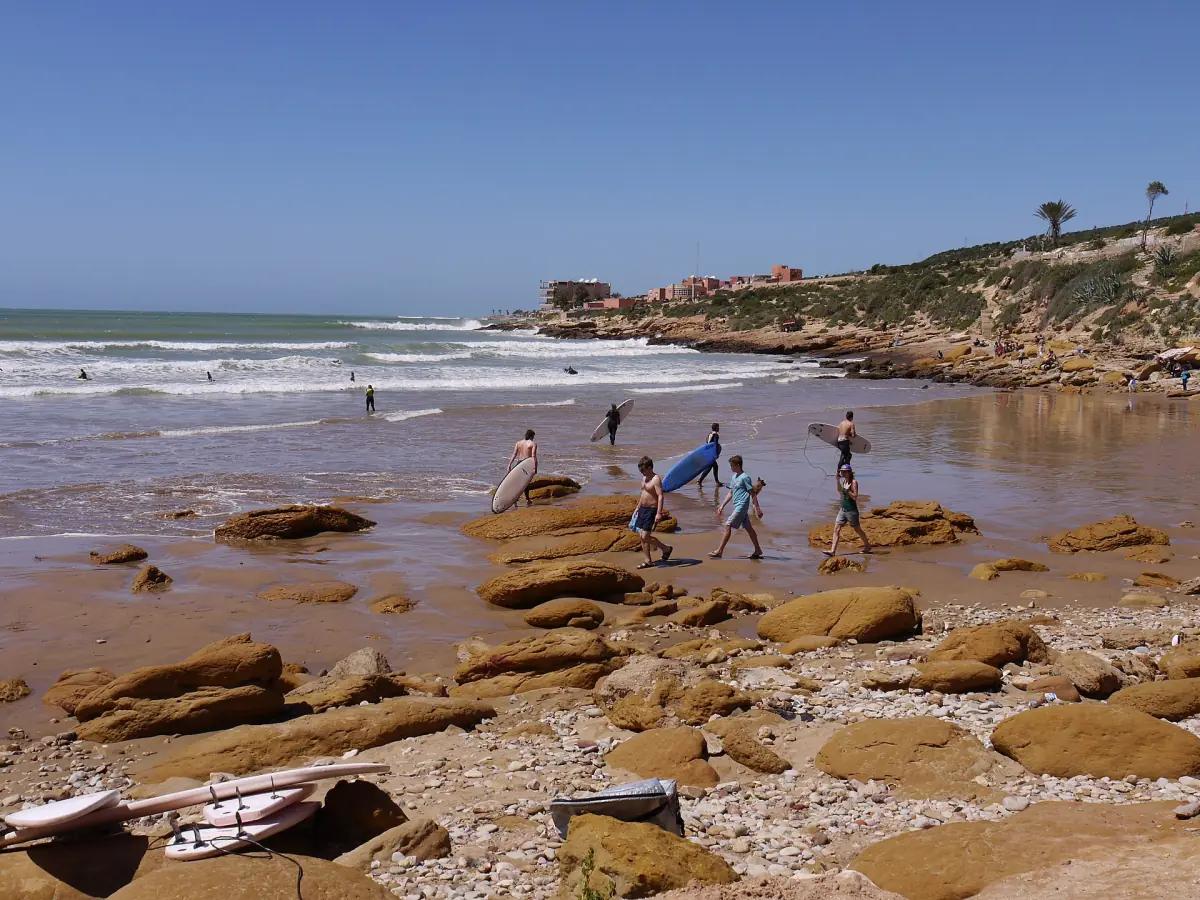
Where to stay
Village, Taghazout Bay or Tamraght.
For the weather in the city of Agadir, see the Agadir weather guide. If your trip continues up the coast, there is also Essaouira weather.
Taghazout weather: frequently asked questions
What is the best time to visit Taghazout?
It depends on your purpose. For the winter point breaks, one school names October to March. For warm, dry days, June to September has the highest temperatures and the least rain.
How warm is Taghazout in winter?
Average highs are 21.1 °C in January and 22.0 °C in February, with lows of 8.4 and 10.2 °C. These are averages for 1991–2020 from a station near Agadir.
When does it rain in Taghazout?
Mostly from October to April. November and December are the wettest, with 42.3 and 47.4 mm on average. June and July get less than 1 mm.
Do I need a wetsuit?
For winter, two schools recommend 3/2 mm and 4/3 mm suits. From May to October one school suggests a shorty or shorts. Ask the school you book with.
Is the weather the same in Agadir and Taghazout?
The figures here come from a station at Inezgane near Agadir and serve as a regional reference. The coast at Taghazout can differ on a given day.